

Walking art fairs, music festivals and conventions are my favorite marathons for understanding consumer behavior and consumption in modern times. At CES this year, I put on my most comfortable shoes and with no precise agenda, wandered for several days, charged phone in hand to capture all that seemed new and interesting. Having worked on trend reports for decades, instead of pumping out opinions in real time, I now enjoy sitting with the experience, the photos and videos for several weeks, searching for ideas that can be starting points for new categories of products and new streams of thought. My short list is not comprehensive. There were hundreds of other innovations I demoed or saw, and there’s plenty of other themes to write about. But here’s the ones that have been captivating my thoughts the past few weeks. Let’s theme them: Nostalgia, Automation and Augmentation.
Nostalgia
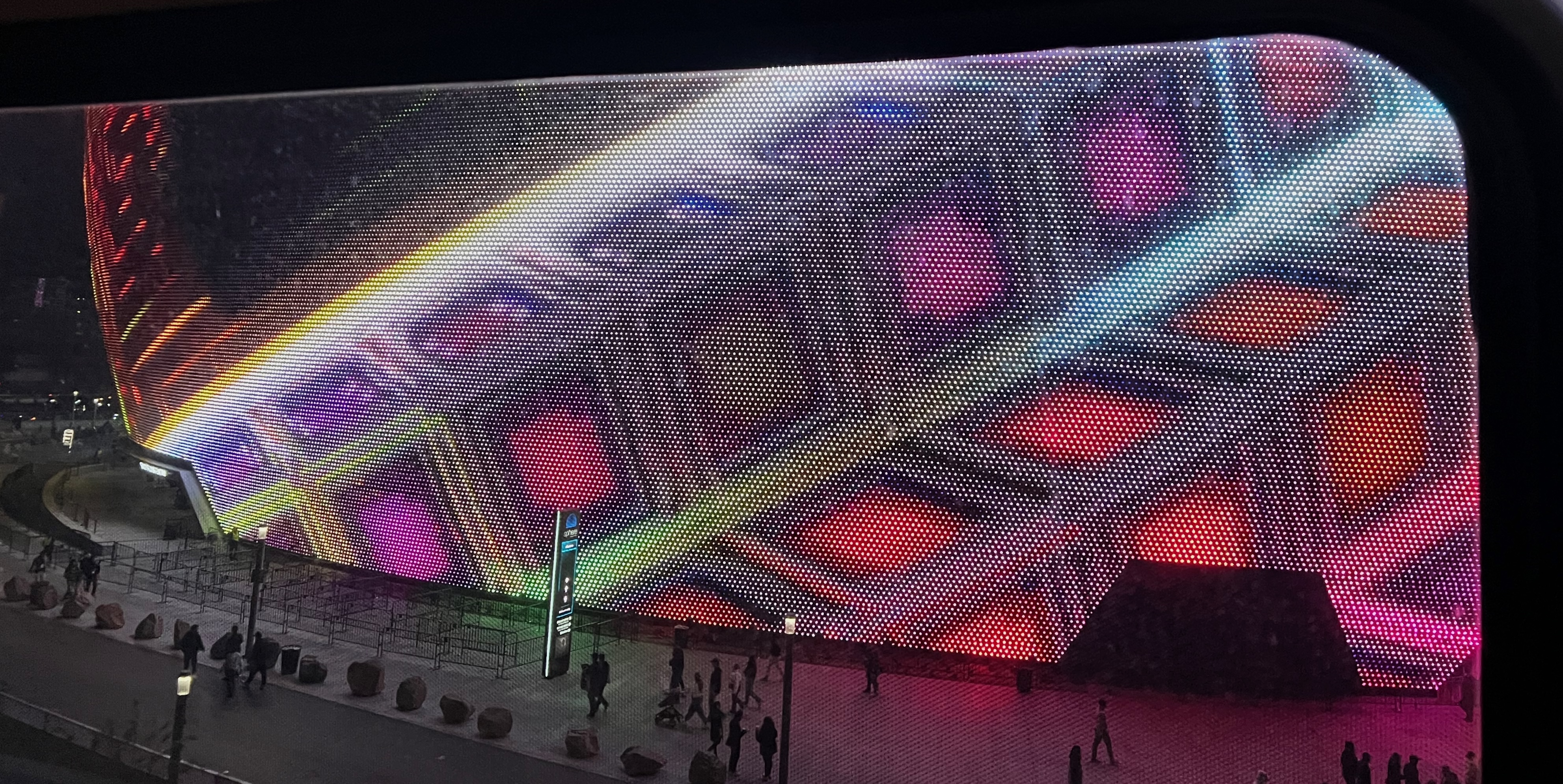
One thing is apparent walking through Vegas, past the exterior of the kaleidoscopic Sphere with its mesmerizing screen, in and out of casinos to get to and from events at CES. A new type of retro futurism is alive and well. We are moving through a city that at time feels like TRON, but we are gambling inside of rooms that channel cinematic icons of the past. Oompa Loompas danced inside of a “Willy Wonka and the Chocolate Factory” machine while a voice echoed, “Shocking Win” every time “Frankenstein” hit a jackpot. There were mini-games within mini-games within games and the touchscreen machines with these versatile IP were always crowded. I kept waiting for my seat to vibrate every time I won. While using IP for gambling is not a new concept, the leveling up of haptics and immersive features got me returning to gamble every day for the purpose of entertainment. Even in the airport, while waiting for my flight, when my eye saw, “Crazy Rich Asians” I inserted a twenty and smiled. The new surround sound machines that play iconic sound bites from media at pivotal points in the gambling experience truly feel immersive, even if the gamblers’ choice still mostly revolves around choosing how much to wager.


Nostalgia: Planned Obsolescence Resurgence


The last time I saw a new boombox was at an art gallery for a Tom Sachs show. This was several years back when he was crafting boomboxes out of plywood, foam core and duct tape, sculptures that played music. I was amused. When I interviewed Sachs several years prior, he talked extensively about the evil of planned obsolescence. and this directly inspired me to continue collecting all the obsolete objects that shaped my early life, from my 1980s Walkman to my own boombox that cost my entire weekly allowance just to replenish the batteries. Both now sit in my studio as dusty objects. I look at them and they bring me pleasure, and then I turn on Spotify.
The French company, We Are Rewind, has noticed the popularity of cassettes and nostalgia artifacts from 80s culture, and is bent on improving and resurrecting it with their various machines. Their $159 cassette player contains all the features of a classic 80s walkman, but with improvements: a lithium battery and Bluetooth capabilities. They sold 30,000 of them last year. Is this particular nostalgia trend about listening to music untethered from the constant interruption of one’s phone in complete concentration to a song?
A new hi-fi boombox they introduced at CES is named Blaster, and conjures classic Run DMC vibes, but with a new polished and sturdy design. Complete with noise reduction circuitry and a Bluetooth speaker, popping those vintage cassettes you’ve been hoarding or the new Charli XCX can take you back to that other time feel. One wonders if this trend on the music side will also drift into film. Will we have another generation of physical media players redesigned to play all the other discarded planned obsolescence media that has fallen out of streaming licensing?
Nostalgia: Remixing Retro Culture

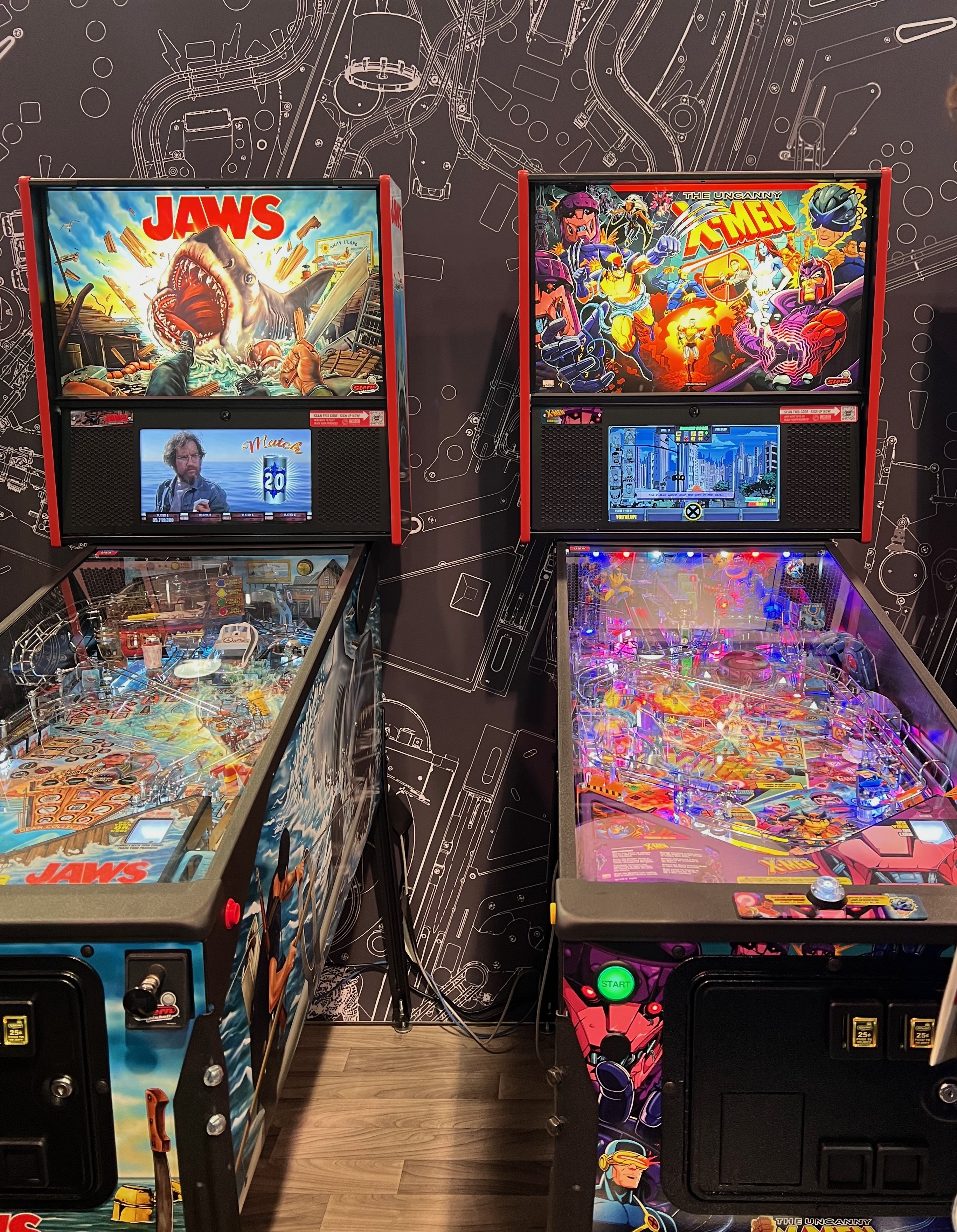
Inside the Central Hall, a crowd gathered around the PIMAX booth, where a younger player wearing a VR headset played an even more realistic version of a traditional racing game. PIMAX were demoing their Crystal Super, a 29 million pixel VR headset. Feeling like an F1 driver seemed closer than ever. Further down the hall, a dozen mostly middle-aged people played Stern Pinball’s newest line of machines, themed Dungeons & Dragons, JAWS, and Metallica. These pinball machines have become more immersive, supercharged with motorized toys and an extra screen that features everything from live concert footage to iconic clips from movies. More importantly, while the tactile game play experience feels almost identical to traditional pinball, Stern’s “Insider Connected” layer allows players to compete on Quests, and against each other, to further their lifetime rank. Throughout CES, the line for the pinball game rivaled that of more modern gaming VR demos and people lingered at booths to watch leaderboards. showing there’s definitely space for a myriad of escapist entertainment, nostalgic and futuristic. Gaming has evolved, but engaged audiences exist across all demographics and types of play.


Automation: Your Mani-Bot Is Awaiting
Tucked back in a corner, a small mob of people clustered around a booth. Intrigued, I walked around the back of it to peer into its offering. Was it another massage chair, now rebranded as a massage robot? Actually it was a…nail machine. I had to step on my toes to witness people demoing a row of Umia Manicure machines. Billed as the automation studio that applies nail art directly to human nails, their booth was decorated with an interactive survey where attendees were handed yellow dots to vote on questions. “Where would you like to get your nails done?” was one question. While a majority of people voted for “nail salon,” there were substantial clusters of yellow dots at choices like “department store,” “shopping mall,” and “cafe.” But the category that won was “Other” where choices ranged from home, school, spas, event spaces and airports, suggesting that the demand for manicures is truly ubiquitous. With 24 pending patents on their machine that promise “instant, flawless results” is this the beginning of a world of beauty bots? How will the industry react that has been historically low-tech and human centric? Will V2 have a conversational robot that gossips with you while personalizing your nails? Or will we just have to stay with humans for that?
Automation: Flexible AI Lighting


Artistic creativity infused the entire vertical around AI lighting. One frequent complaint about LED lighting has been its harshness compared to the soft light from traditional incandescents. For anyone that has suffered through fluorescent houses or workplaces, real life that feels like the innie world of Severance can feel oppressive. The forced conversion to living with basic LED has been one of the most challenging climate change initiatives. However, hope is here with flexible LEDs and AI in lighting. Think of these products as a combination of Christmas lights and Philips bulbs, strands of lights that can be customized and programmed to instantly transform your space into whatever mood you like. Lighting and their color can adjust based on not just the time of the day, but weather, mood, and in the future, even more complex scenarios. The LePro lights themselves are bendable, expressive, at times somewhat reminiscent of a glow stick. They’re also voice-activated. When I first spotted a strand of lights strewn across another park-like space at CES, I thought about the artist Felix Gonzales-Torres’ “Light Strings” and all their different iterations. Comparing AI lighting to one of my favorite conceptual artists may be my greatest compliment to any company at CES. These lights give me hope that we can have lighting that doesn’t destroy the earth and it can be artful. Of all the mass trends I saw at CES, this wider voice-activated lighting category is one that I think will get adopted at a scale, the quickest due to its cost, ease of use and overall feeling of joy.
Automation: Smart Kitchen Tech
Universal subjects like food have often been underserved in the tech world. COVID and subsequently events around food safety and climate change have brought much thought and energy to food tech and waste. The internet of things gave the world smart fridges, but historically it’s felt like they’ve heralded more entertainment hubs in the kitchen. Samsung’s latest CES installation, aptly entitled “Samsung City” took viewers on a journey through their future end-to-end experience. While there were topic areas completely of disinterest (future yacht innovation) I lingered in their smart kitchen intrigued by their 4-Door Refrigerator with AI Home and AI Vision Inside 2.0. Their designers have finally figured out that the fridge screen should be larger than an iPhone. In fact, we can have a screen large enough to be a TV on the fridge door. While the fridge can have entertainment, the designers have realized that standing in the kitchen and/or in front of the fridge should also be useful. No longer do you have to channel a Philip Lorca diCorcia image by this stance; instead you can plan your day and dinner! So how does it work? Their AI Vision system uses cameras to track the inventory of the fridge, including expiration dates and also can alert when one’s grocery list is low.
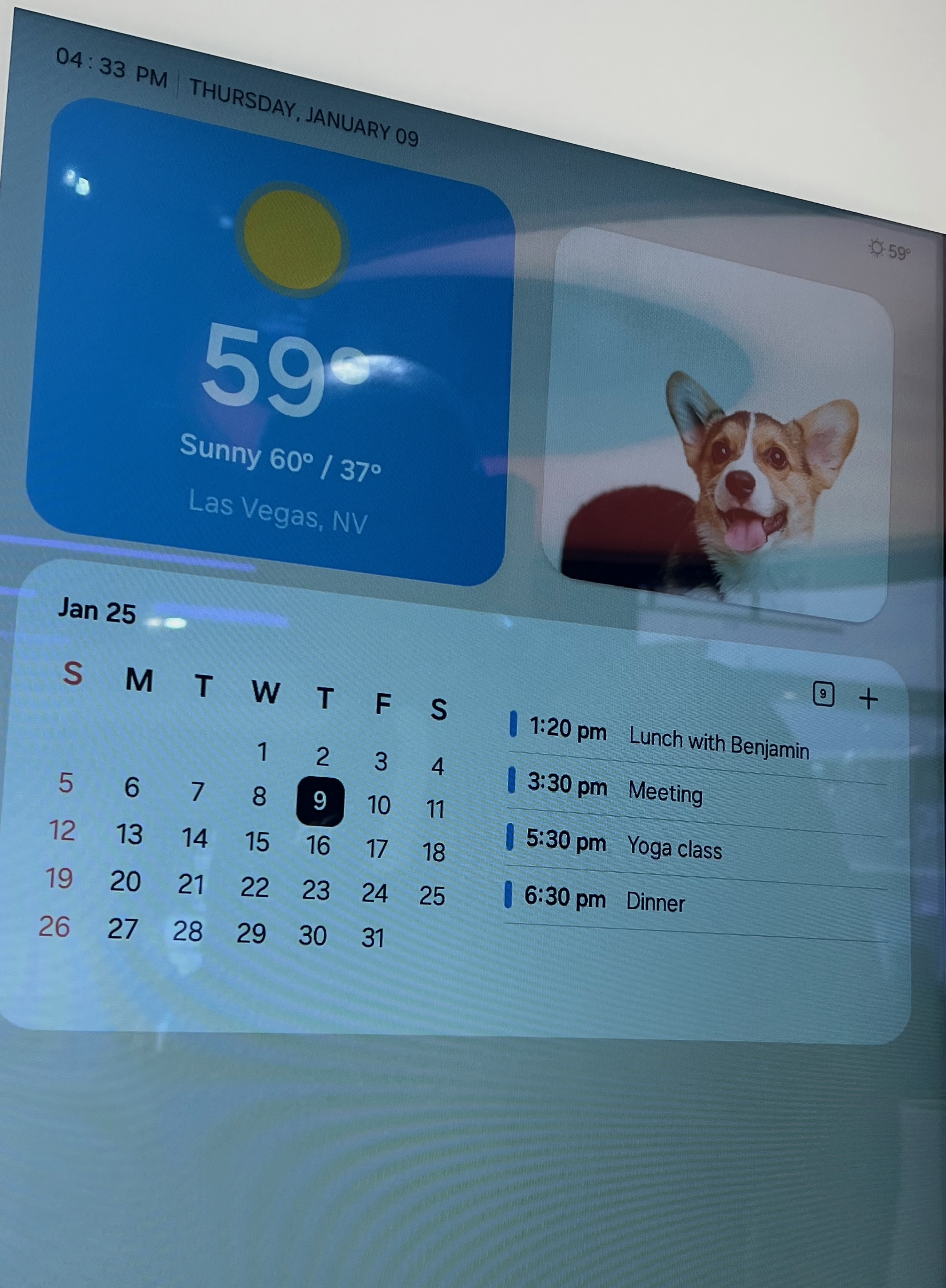

Prior to CES, I wrote down a wish list of what I wanted a future fridge to be. The fridge should be able to analyze the contents inside of it, the dates the food was added, consumed, removed. It would compare inventory over time. You’re missing milk? You’re out of butter? Your lettuce is wilting? The fridge can also connect to family organization programs. Perhaps food categories would be assigned to certain members. My husband buys meat, dairy and fish, but I am in charge of fruits and vegetables, which I get from the farmers market on Saturdays. When the fridge notices that we’re out of fruit and veg, it would ping me a reminder to get them on my next farmers’ market trip. Ingredients are assigned to family members for replenishment, but sometimes when staples are missing, both family members get notified – there’s no milk! Advanced areas could involve the analysis of ingredients – solving the question with what should we make tonight with options to cook based on inventory. This nerdy braindump had been in my notes for a while and so I was pleased to discover that the Samsung fridge is moving in that direction. Integrated into the larger city of devices that touch everything from pet to elder care, I felt like user-centered design was front and center in their product building.
One question that I felt was on many designers minds was around discovery. In music, a category I’ve worked on forever, the neverending question is, “what to play next.” But in the smart home, everyone continues to ask, “What’s for dinner?” as they stand in their kitchen, paralyzed by indecision. At CES, I saw this problem statement address not only through the Samsung fridge, but also through a startup called Versaware, that has created a “culinary companion,” a euphemistic term for a smart cutting board. The board also acts as a scale, helping measure ingredients, but with its built-in display screen it teaches users about cooking, and what to make with the ingredients the user identifies. Perhaps the future for the Versaware is becoming one of a number of accessories to the Samsung smart fridge? All in all, it’s good to know we have designers that are thinking about the same universal problems. Will there be more kitchen ecosystems where the myriad of endless gadgets will consolidate into less products and devices? Will they communicate with each other? Are these pressing problems to solve? Not really, but I still was drawn to the creativity behind approaching the often unloved design of the kitchen. Also, I was hungry from all the walking.
Augmentation: Mixed Reality Makeup

While AI and automation is on everyone’s mind, I still like to point to the steps in between. Let’s call that trend: augmentation, using tech to create a hybrid of mixed reality and perspective shifting. Two of my favorite examples solved daily challenges: the first around makeup, the second around making sense of the sounds in our yard.
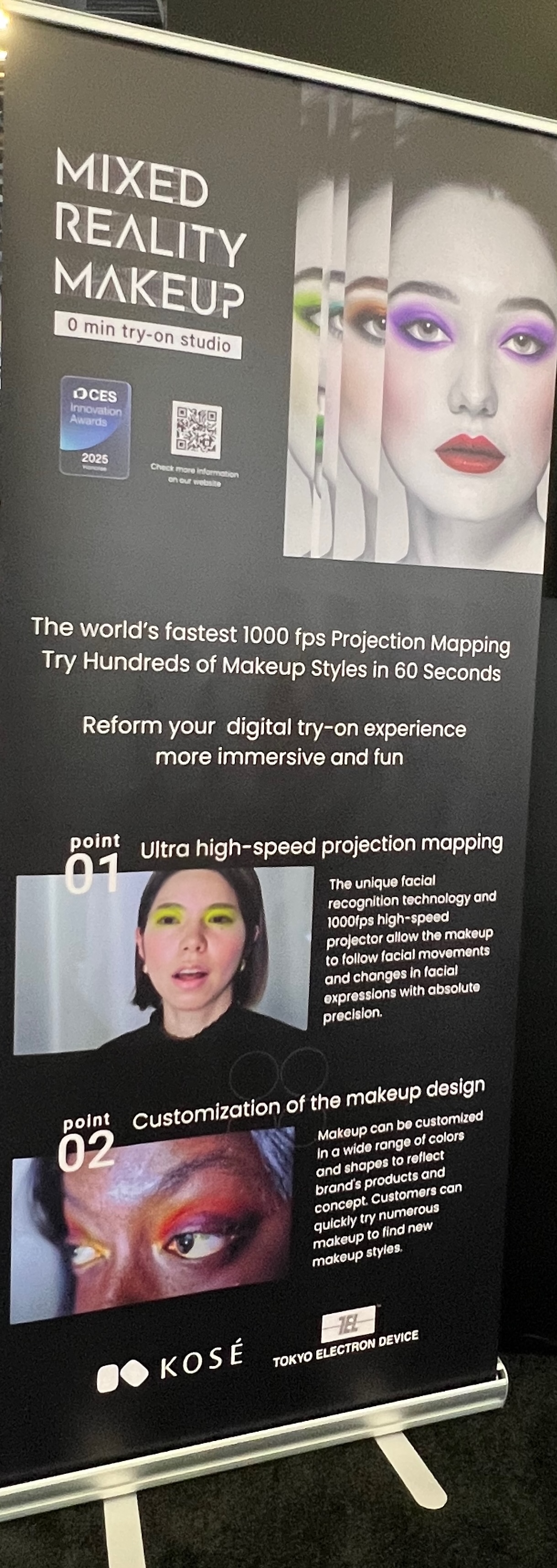
Growing up in the 80s, trying on makeup was cumbersome at best. The choices were limited depending on access; access to family members with makeup, access to retail locations where sampling was limited or predicated by perceived purchase, often of expensive makeup that felt outdated or of another time. I never felt like I could be transformed into Madonna going to the Clinique counter. The arrival of Sephora in the late 90s transformed what it meant to grow up “trying on” makeup and the last several decades have been so transformative the latest issue of “Fast Company” has on their cover Sephora CEO Artemis Patrick. Shifting makeup discovery away from claustrophobic department stores to more private yet playful retail spaces like Sephora, Ulta and endless competitors, has been game changing. Still, trying on makeup that others have touched in a post-COVID age, even with the best disinfectants and cleanliness, can feel cringeworthy. So I’ve been intrigued by the advent of the Japanese company KOSE’s mixed reality makeup, which can be defined as projection mapping makeup. Utilizing facial recognition and 1000 fps projection, one can easily switch between styles without touching the product. This is such a win for public health, and for retail theft. How will it dilute the brand experience and how will consumers differentiate between brands when shade and color may seem similar? How will tactile aspects like feel and weight play out? I greatly enjoyed my experience, where I channeled my late grandmother’s love of bold eyeshadow and oppressive blush, for a quick minute. Will the future hold other sensory versions of this? Will there be perfume bots that allow us to easily sniff out scents?
Augmentation: The Entertaining Natural World
In the last decade, the decline of the natural world has been well-documented. Oliver Milman’s “The Insect Crisis,” widely excerpted, shared the idea of Insectageddon to a wider audience. It became easier to conceptually observe what it meant to live in a world with less – less insects, less animals, less nature. This has helped illustrate the acceleration of climate change. It has shown the reality of extinction. The UK’s NBN Atlas, a platform heralding the largest public biodiversity datasets, openly shares these stats, but the population loss often can feel abstract. I know we have less x, but I can’t see it, so how do I really know it’s true?
Simultaneously, we’ve come to understand that nature is entertainment and entertainment is a powerful segue to teach younger generations about conservation. There are vast global audiences to watch the life and death drama of the natural world. We have a myriad of cable channels, IMAX films and blockbuster YouTube channels like BBC Earth. We also live in an age of cheap, portable cameras with powerful zooms that enlarge the miniature world around us. Combining that with the desire to surveille creates the perfect storm to introduce natural world surveillance. Maybe we’ve been watching the wrong things, and instead should shift our focus.
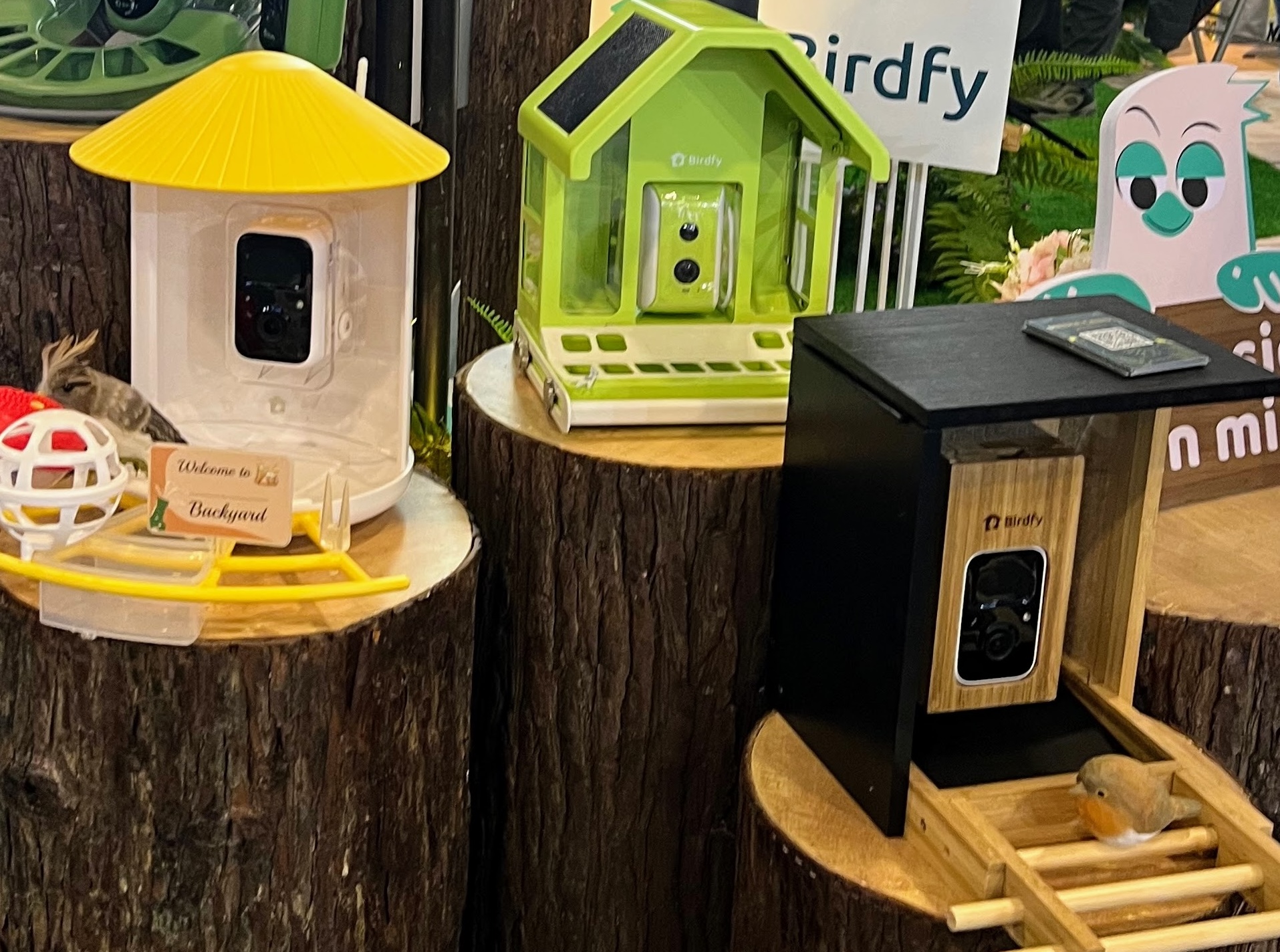
Of intrigue and on display at CES, beyond the rows of massage chairs, robots and endless airfryers were a variety of tools and machines to observe and interact with wildlife. From bird feeders and bird baths to tiny, often magnifying cameras, nature felt like its own category. At CES, the competition in the natural market really came down to differentiation through design. Birdfy, a spin-off of Netvue, a surveillance company, had mid-century type bird feeders, dual camera hummingbird feeders and even smart bird houses. All could fit within the aesthetic of one’s property.
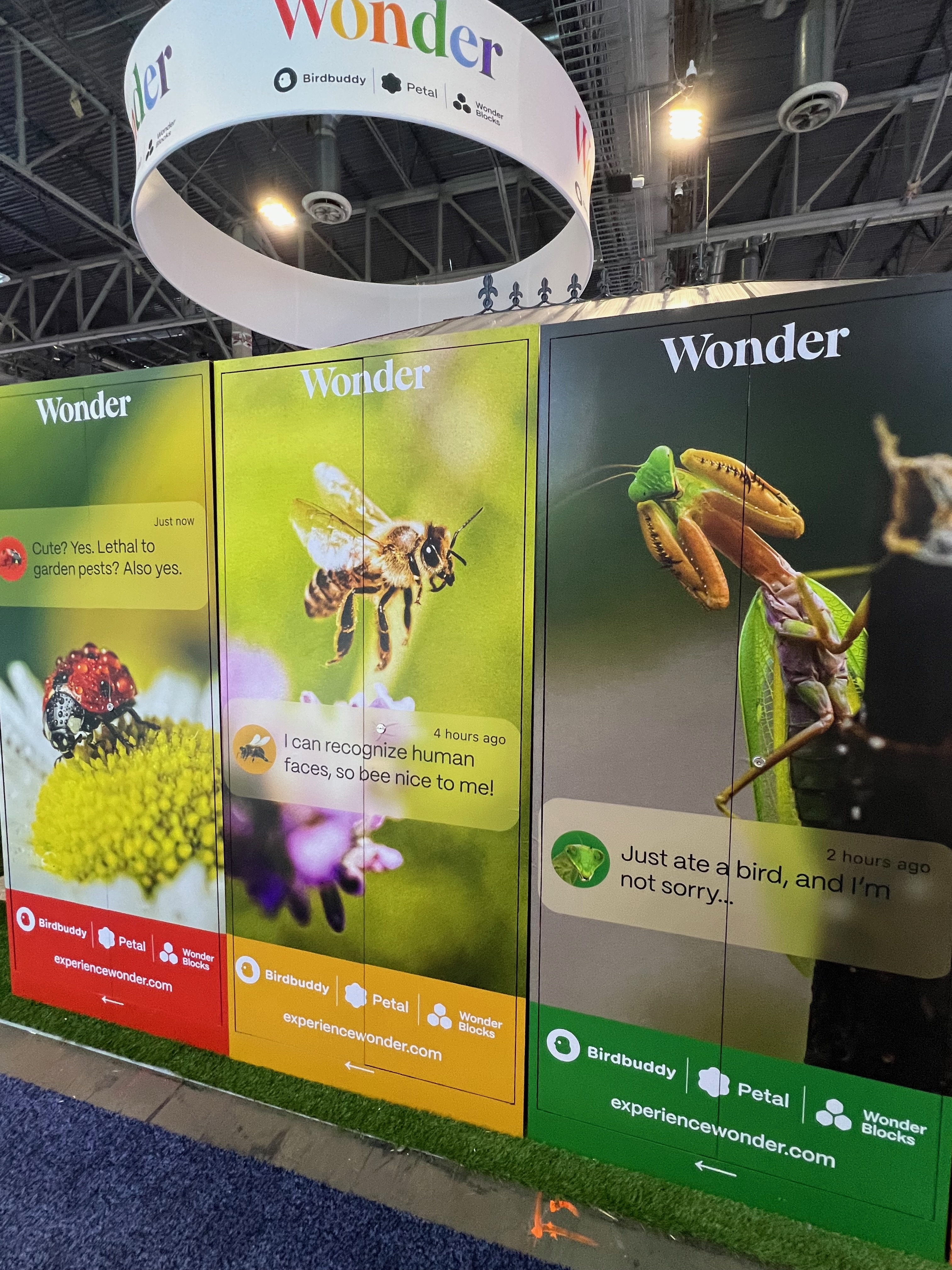
Yep, bird tech. There is a world of it, powered by apps, active social communities and gamified birdwatching. Tech helped consumers recognize species and learn more about ecosystems in a more compelling way than memorizing illustrations. The more I thought about bird tech, the more this seemed niche, but I was happy to discover a new potential mass use of it from a company called Wonder. They previously created a product called BirdBuddy, a smart bird feeder. At CES, they built a beautiful park-like experiential installation where they showcased their two main products, Petal and Wonder Blocks. Petal is a colorful biomorphic camera system that magnifies the natural world while Wonder Blocks are a modular system of bee and bug hotels along with terrariums. You could think of the Wonder Blocks as natural shelters that an owner could support and nurture.. Overall, Wonder has the potential to make a large audience become more interested in the botany and biology around them and better understand there’s a vibrant sanctuary right in their backyard or school. I loved the mission of this company, as did a magnet school teacher I met walking out, who wanted a whole set to install in her school. It’s coming to Kickstarter this spring. When I arrived back to LA to smoke-filled air and silence in our yard, I wanted it for our house, for when the birds and wildlife eventually returned.
Reflecting on CES, a month after the event, after weeks of fire and tragedy in LA, and many days wondering how to fix problems that seem unfixable, was this insight: humans can direct the creation of more intuitive meaningful technology. While there were many exhibits that focused on automation in clunky, and often dehumanizing ways, I’ve chosen not to highlight those future failures. Instead I’m more interested in looking to tech to solve emotional and practical needs.
Products don’t need to merely be functional to exist. They can be joyful, educational, and connective to amass millions of users that then shape it to fit their needs. Smart kitchens can help families stay organized; LED lighting can bring art to the home. Entertainment can be consumed in many forms; wildlife tech can inspire conversation and conservation.
Yes, there was plenty of tech that confounded me, tech that felt like out of a real-world WALL-E where robots replaced parents and cared for both babies and pets. Everyone else can talk about driverless cars and flesh robots. Or the ton of consumer and mass surveillance that all seemed directly inspired by “Minority Report.” But I tried to ignore and focus on what I thought was positive and interesting.
Tucked into a small footprint in the Venetian, I found myself standing in the Gates Foundation booth, a museum-like exhibit that supports their mission of “creating a world where every person has the opportunity to live a healthy and productive life.” Most of their innovations were what we’d call low-tech, but their applications were universal and I found myself standing at the booth for longer than almost any other. I was intrigued by their slew of low-cost, high impact innovations around women’s health, from intrapartum wireless sensors to portable AI-assisted ultrasound monitors that could be used on a mobile phone. Together, these human-centered innovations have positively impacted millions, perhaps billions of humans around the world.
About a decade ago, I went to a Shigeru Ban talk at LACMA that I reference regularly. In it, he talked about his relief work, building sustainable structures for those displaced due to natural disaster. His temporary housing, often made from paper, always possess accessible design elements and materials that provided comfort, privacy and light during traumatic times. Reflecting on this year’s CES and the aftermath of the fires at home, I find myself looking to Ban’s work again, yearning that more tech was being made to make the world a better place to live as the planet heats up.
In the basement of the Venetian, in an area for startups aptly entitled, “Eureka Park,” I found something I keep thinking about. A Japanese company called Magic Shield was demonstrating new flooring that protects people from fractures. The material contains advanced shock absorption to lessen the impact from falls. Instead of putting extensive tracking and surveillance on those aging in place, maybe one solution would be to give them better, less slippery and more absorbent flooring? This was the type of thinking I was looking for, and I was happy to begin to find.
Yes, we all want the things from smart fridges to AI lighting, and beyond (driverless cars, cleaner robots, etc, etc) but maybe before we go there, we need more long-lasting, energy efficient tech first. Those are the trends and product I desire to create, observe and support.

 Carly Eiseman